Blog
Notes on building tlbx — persistent browser terminals, reverse-proxied app previews, structured agent controllers, WebRTC remote access, and .NET Native AOT.
.NET 11 Native AOT, Fixing WebRTC Head-of-Line Blocking, and Cross-Provider ACP Handoff
Upgrading every platform to .NET 11, cutting keystroke echo latency from 3,398 ms to 742 ms under simulated cellular load, and handing context cleanly between Codex, Claude, and Antigravity.
All posts
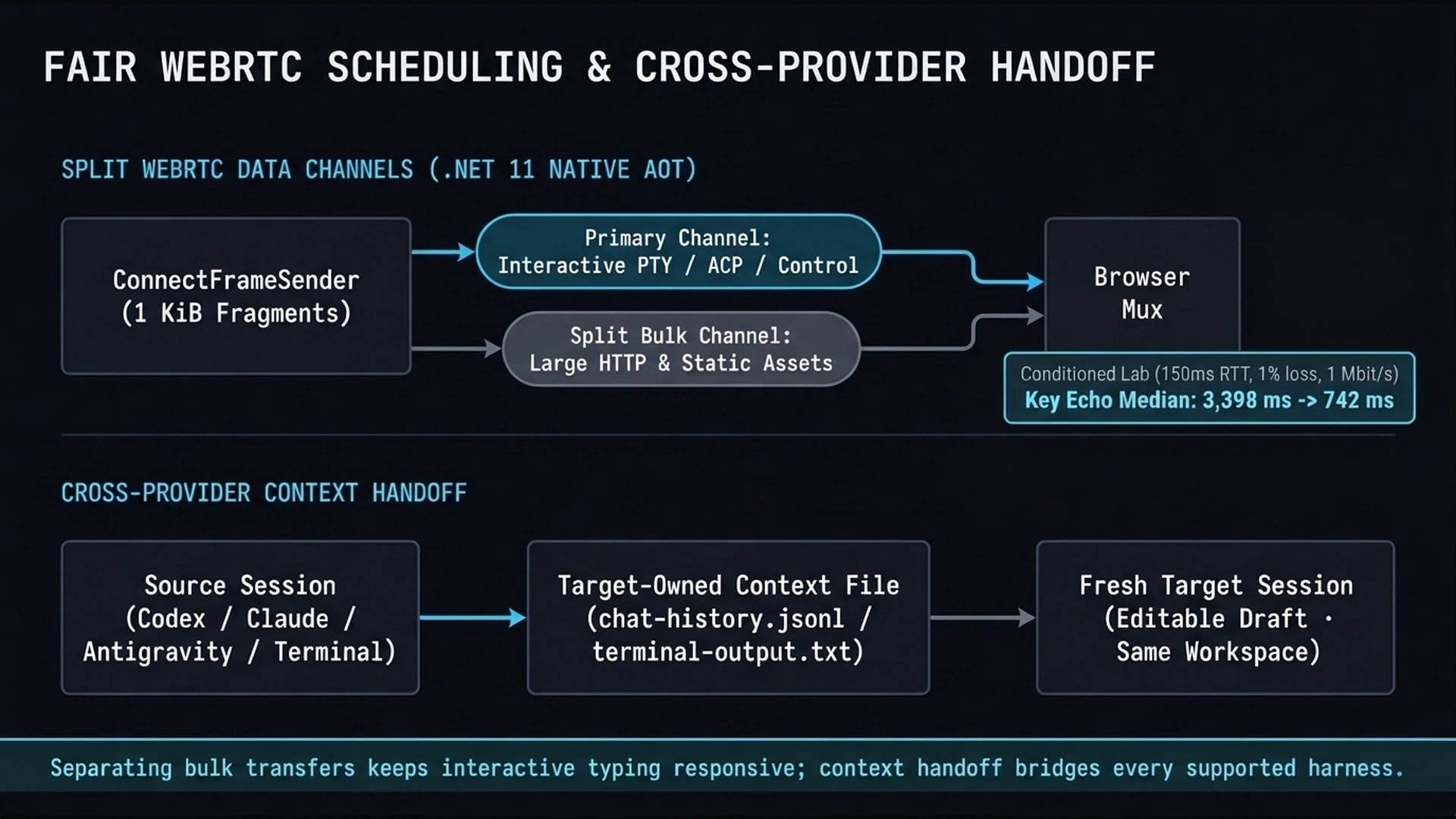
.NET 11 Native AOT, Fixing WebRTC Head-of-Line Blocking, and Cross-Provider ACP Handoff
Upgrading every platform to .NET 11, cutting keystroke echo latency from 3,398 ms to 742 ms under simulated cellular load, and handing context cleanly between Codex, Claude, and Antigravity.
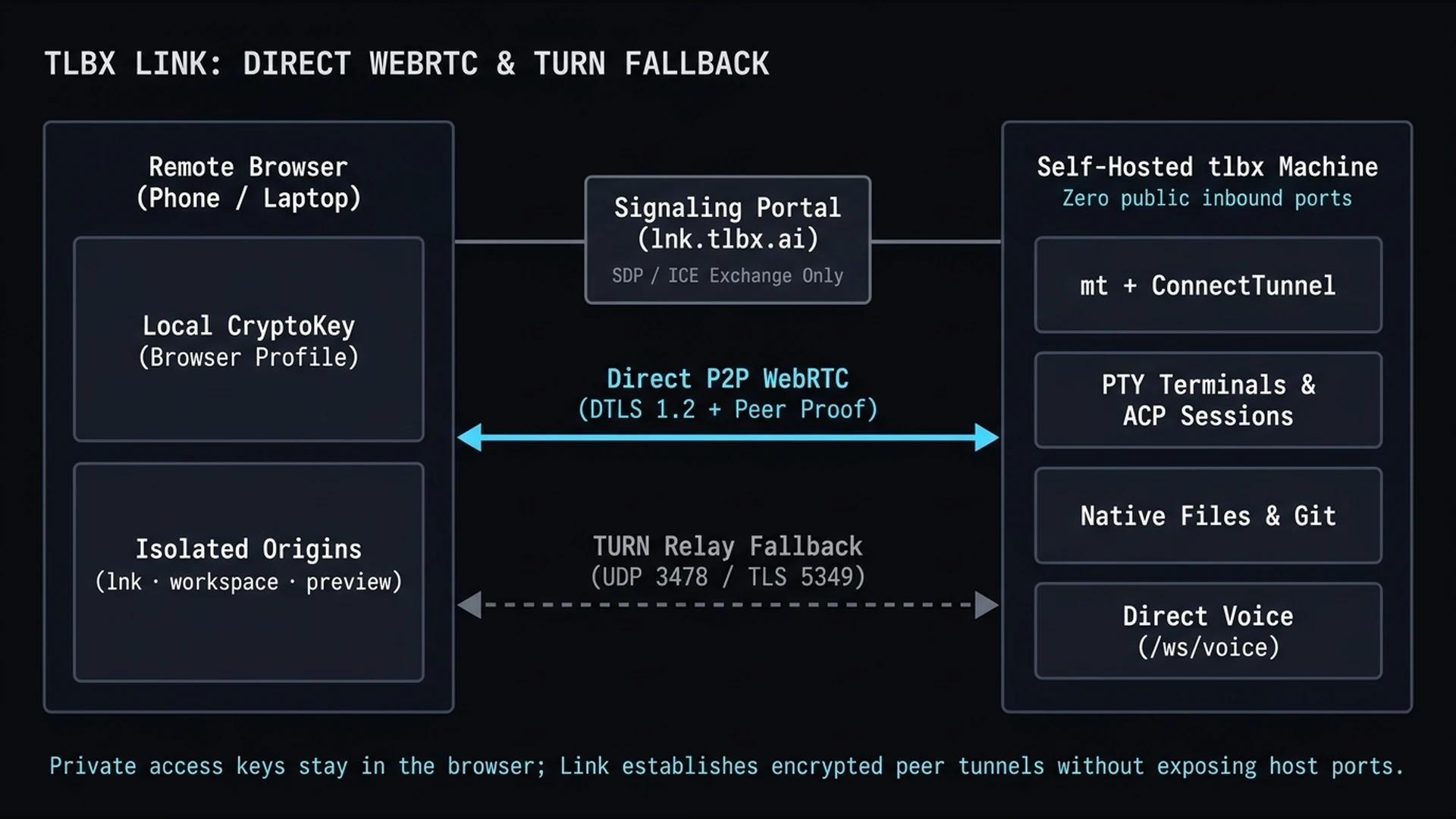
tlbx Link: Encrypted WebRTC Remote Access Without Opening Host Ports
Adding native Git and Files workflows, direct voice orchestration, and peer-authenticated WebRTC + TURN tunnels so any browser reaches your workstation safely.
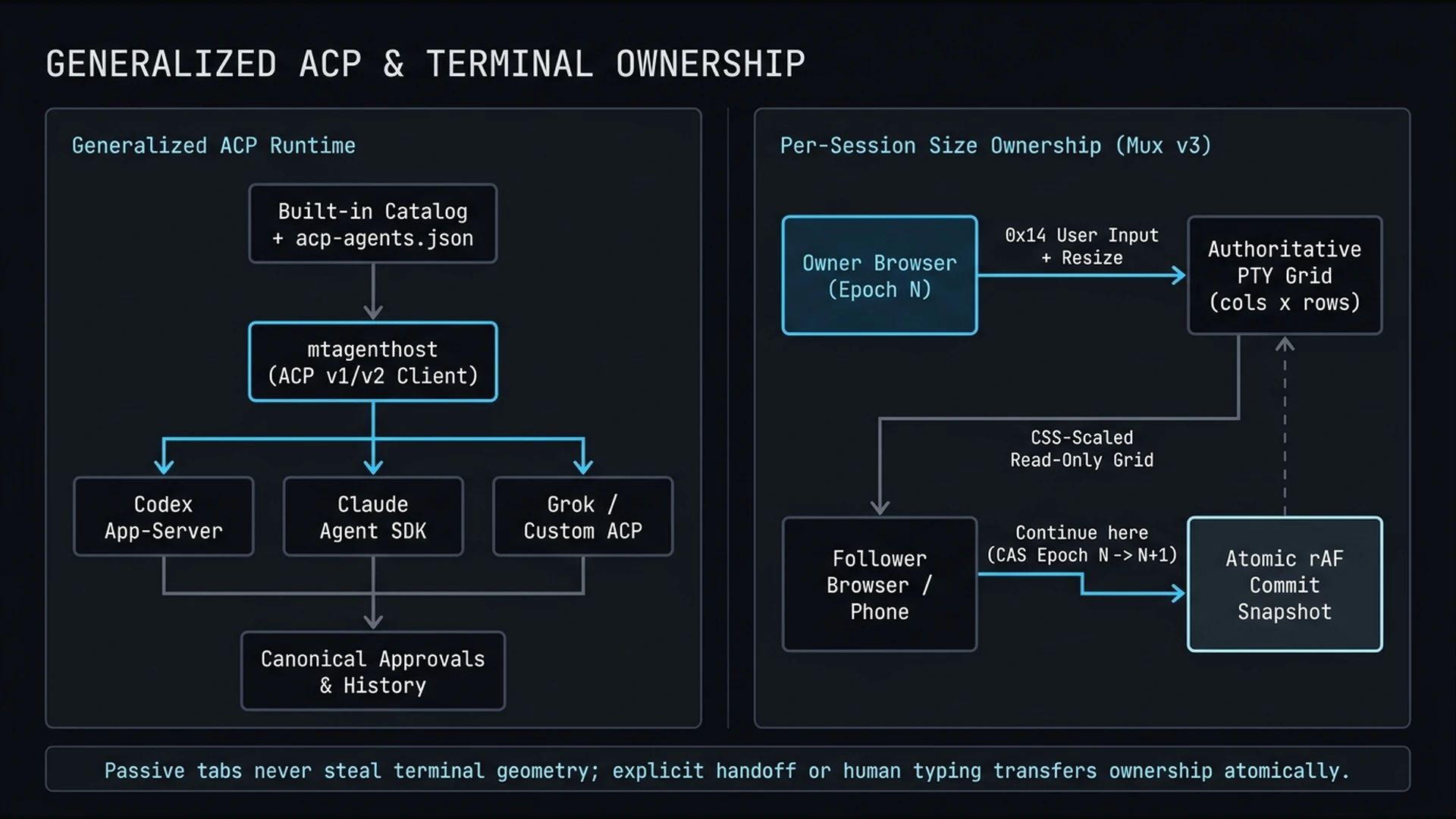
Generalized ACP, Reliable Approvals, and Solving Multi-Browser Terminal Resize Fights
How tlbx v10.8 to v10.17 added standards-based ACP agent support, fixed WebSocket writer reordering, and replaced passive terminal resize battles with epoch-guarded ownership.
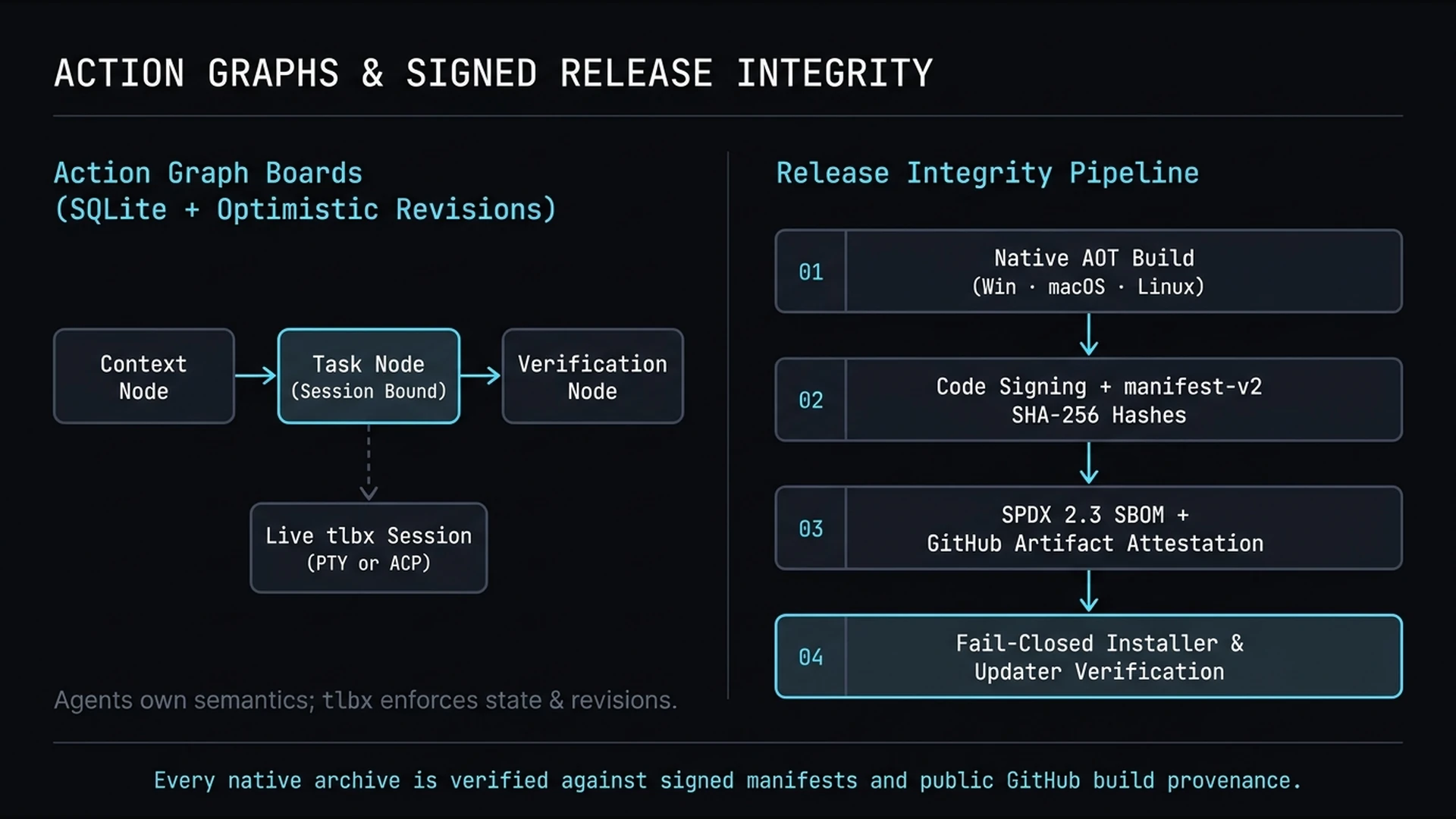
Becoming tlbx: Action Graphs, Software Supply-Chain Integrity, and Kitty Graphics
Completing the identity migration from MidTerm to tlbx 10, introducing agent-curated boards with optimistic revisions, and shipping signed SPDX SBOMs with GitHub attestations.
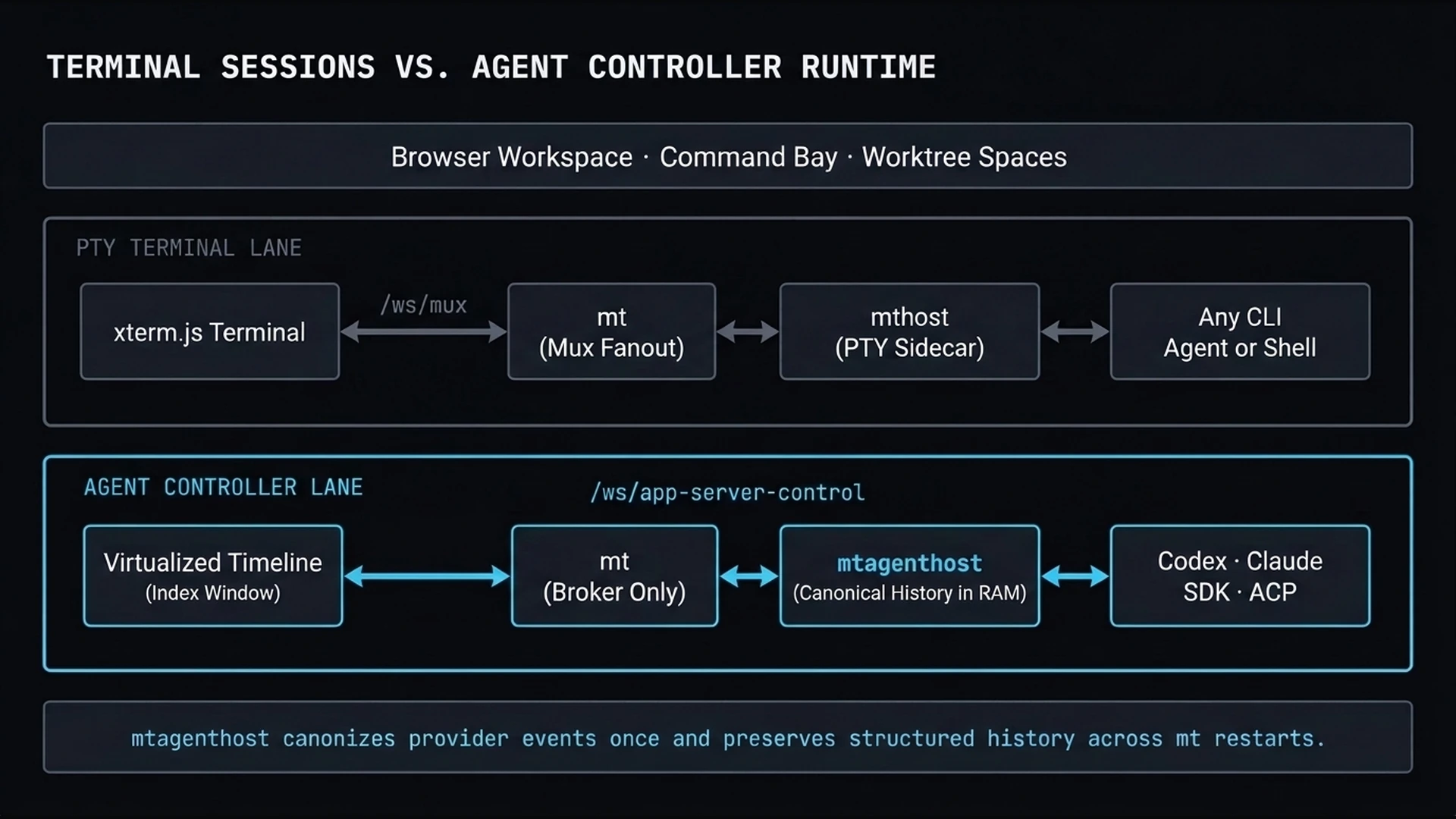
From Raw Terminals to the Agent Controller: Separating Structured Agent State from PTYs
Why scraping ANSI terminal scrollback breaks down for coding agents, and how we built mtagenthost, canonical virtualized history, Command Bay, and Worktree Spaces.
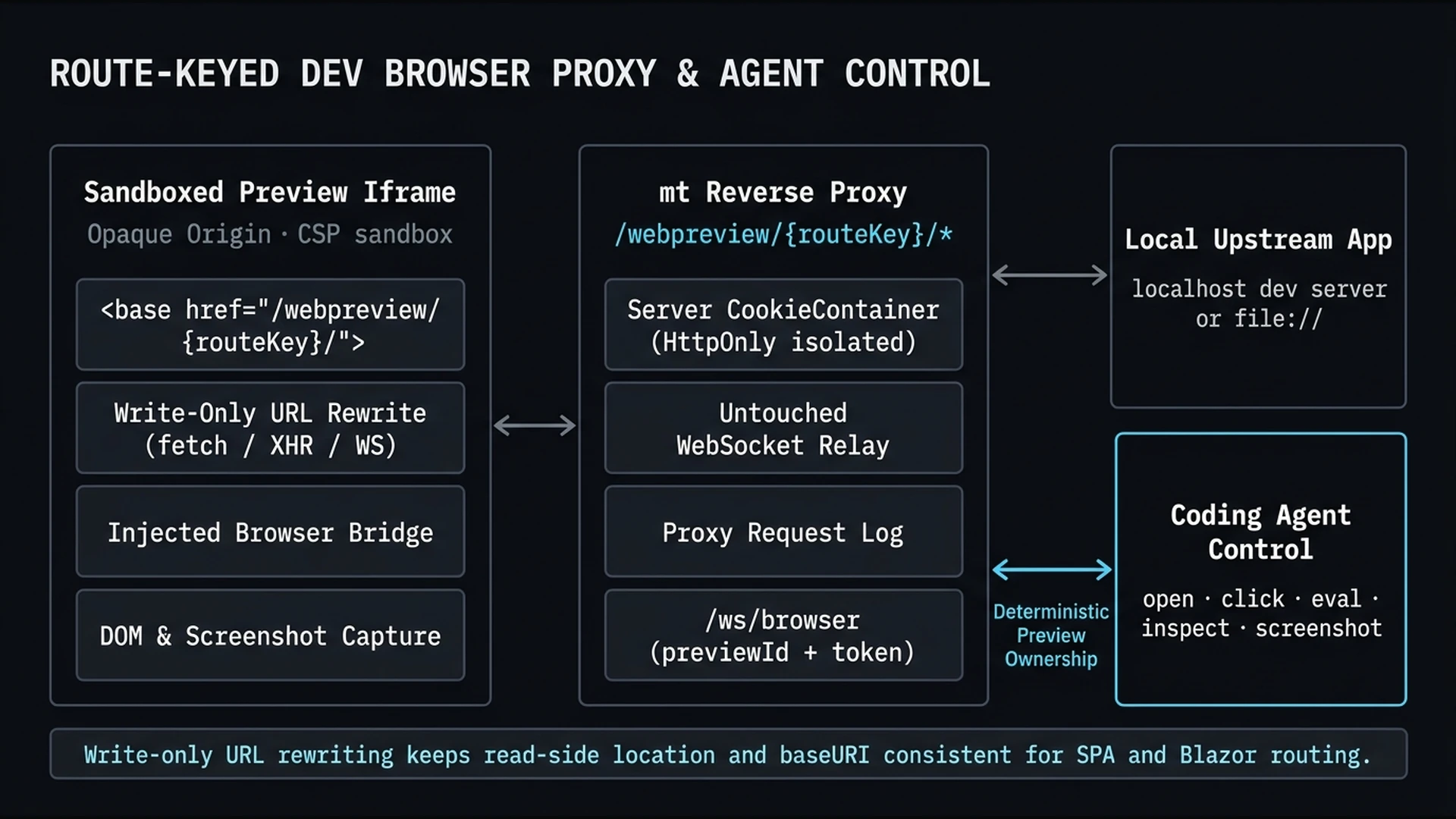
Building a Route-Keyed Dev Browser That Coding Agents Can Actually Drive
Why read-side URL spoofing breaks modern frameworks, how write-only interception fixes it, and how agents inspect localhost apps beside their terminals.
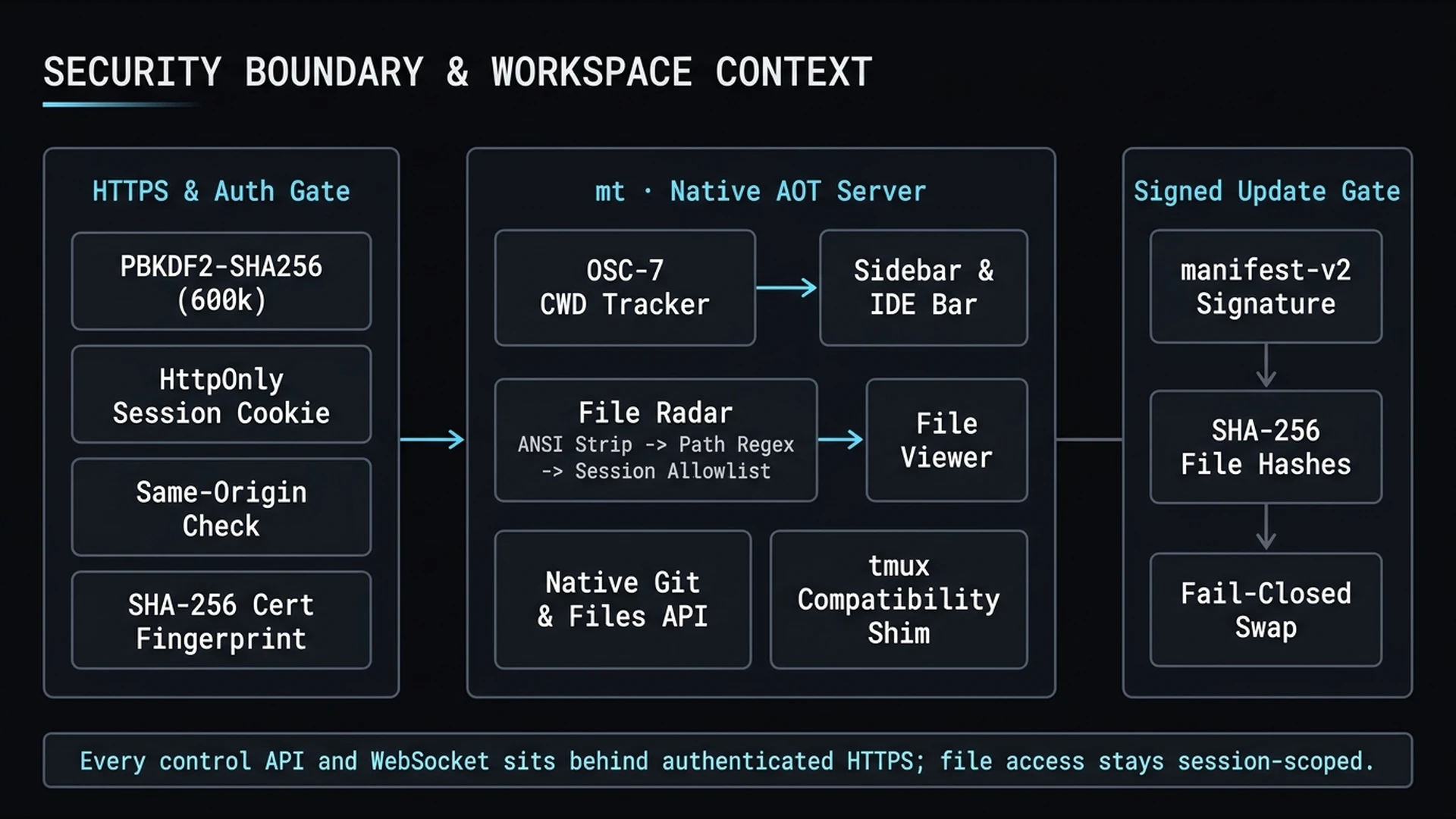
Hardening the Host: Signed Updates, Native AOT, and Turning a Terminal into a Workspace
How 1,061 commits added fail-closed authentication, OSC-7 directory tracking, File Radar, tmux compatibility, and Native AOT binaries.
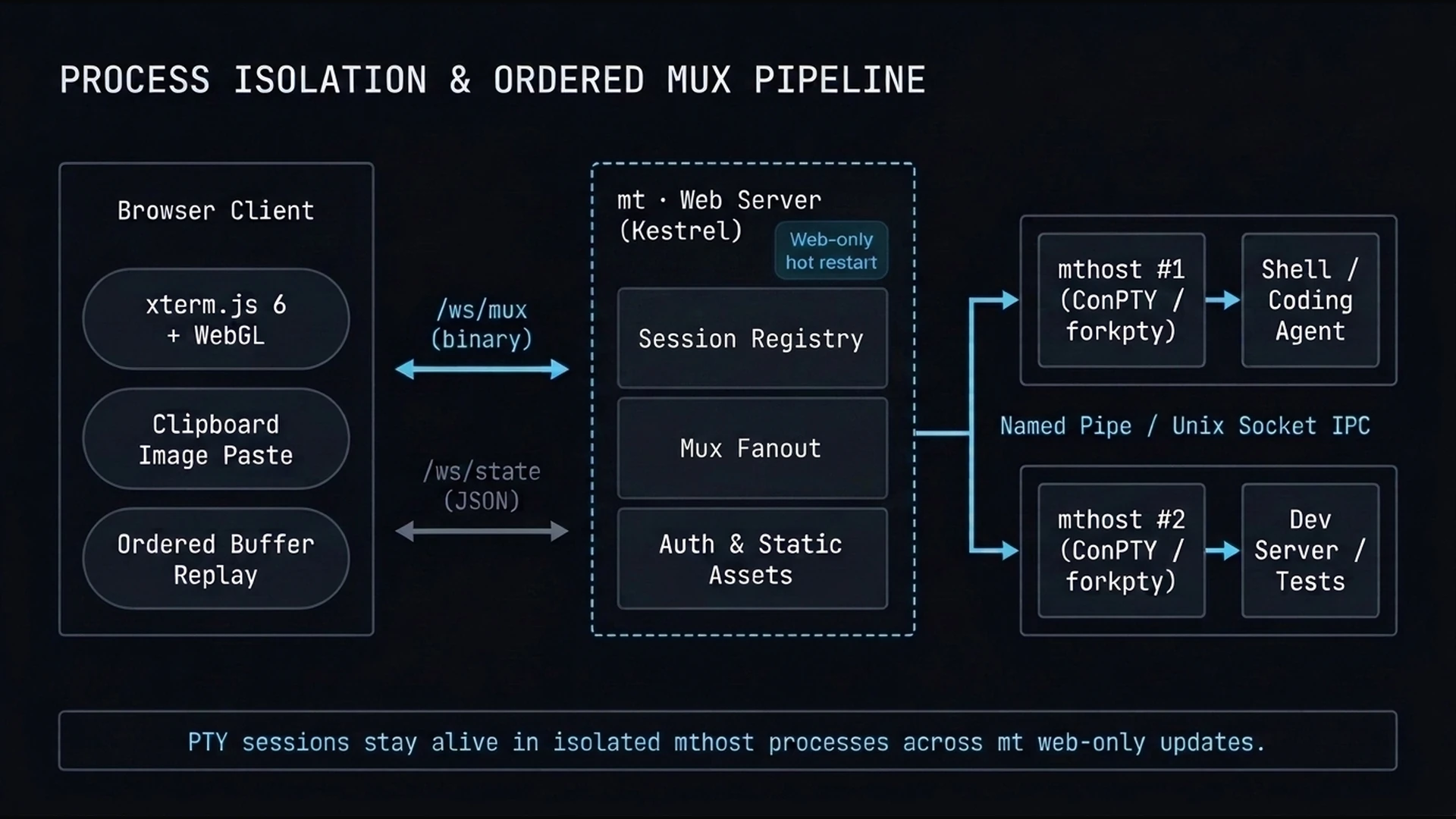
Persistent PTYs in the Browser: Why We Split the Web Server from the Terminal Host
From the initial ConPTY prototype to isolated mthost sidecars, ordered binary WebSockets, and web-only updates that leave running shells untouched.